
The Growing Importance of Video in EMS Operations
Emergency Medical Services operate in some of the most dynamic and high-pressure environments in public safety. Every call is different, decisions are made in seconds, and documentation often happens after the fact—when details can be missed, misremembered, or questioned. As EMS agencies continue to balance patient care, accountability, and operational efficiency, video is becoming an increasingly valuable tool.
Body-worn and vehicle-based video solutions are no longer limited to law enforcement. More EMS leaders are exploring how video can support transparency, training, and quality improvement—without interfering with patient care or clinical workflows.
Why Video Matters in EMS
EMS professionals are expected to provide high-quality care while navigating unpredictable scenes, bystanders, traffic, and emotionally charged situations. Video helps preserve context that written reports alone can’t always capture.
When used appropriately, video can:
-
Support accurate documentation by providing an objective record of events
-
Improve QA/QI and training programs through real-world scenario review
-
Enhance transparency and accountability for agencies and providers
-
Help protect EMS crews by documenting interactions and scene conditions
Rather than replacing reports or clinical documentation, video serves as a complementary tool—adding clarity where words may fall short.
Supporting Training and Continuous Improvement
One of the most impactful uses of video in EMS is education. Real-world footage allows agencies to review calls, identify best practices, and highlight opportunities for improvement in a way that classroom training often can’t replicate.
Video can support:
-
Scenario-based training using real incidents
-
More informed coaching and performance feedback
-
Review of scene management, communication, and safety practices
When handled within policy and privacy guidelines, video becomes a powerful learning resource—not a punitive one.
Balancing Technology and Patient Care
A common concern around video adoption in EMS is whether it adds complexity or distracts from care. Modern body-worn video solutions are designed to be hands-free, unobtrusive, and rugged, allowing providers to focus on patients—not technology.
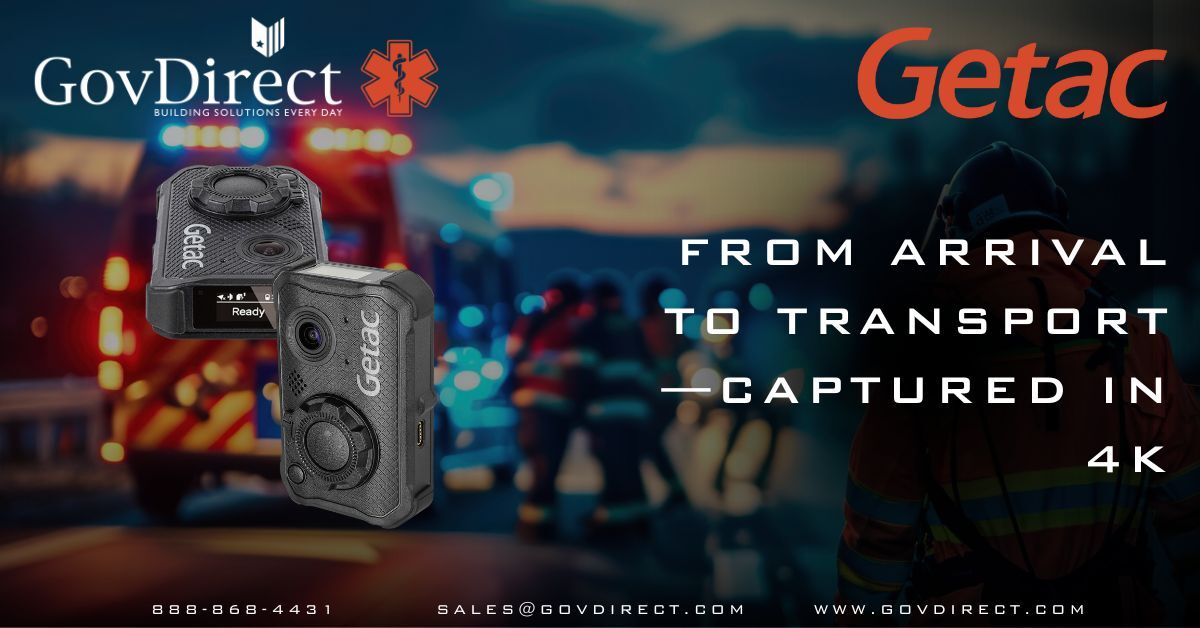
Solutions like the Getac BC-04 are built for frontline conditions, offering high-definition video, clear audio, and durability suited for long shifts and unpredictable environments. The goal isn’t constant recording—it’s reliable capture when it matters most.
Policy, Privacy, and Purpose
Successful video programs in EMS start with clear intent. Agencies must consider:
-
When video is activated
-
How footage is stored and accessed
-
How patient privacy and compliance are maintained
-
How video is used for training versus review
Technology is only one part of the equation. Policies, workflows, and agency culture play a critical role in ensuring video is used responsibly and effectively.
Taking a Consultative Approach
At GovDirect, we work with EMS agencies to evaluate video solutions through a public-sector lens. That means understanding operational goals, policy requirements, and long-term needs before recommending technology.
Video isn’t about adding oversight—it’s about adding clarity. When implemented thoughtfully, it can strengthen documentation, support crews, and improve overall outcomes.
If your agency is exploring how video fits into your EMS operations, GovDirect is here to help guide the conversation—from evaluation to deployment and beyond.